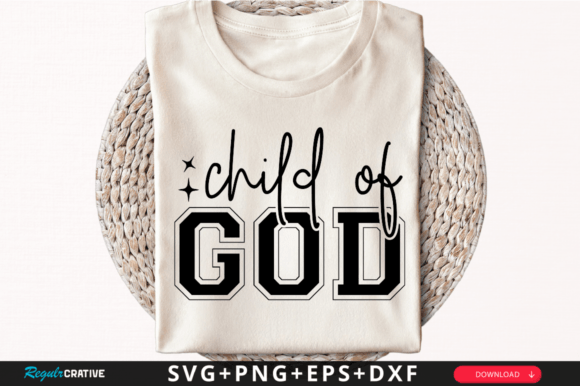
Child of God SVG Design
A Designer’s First Look: Clean, Reverent, and Ready for Real Stitching
When I opened the Child of God SVG Design, my first thought wasn’t “cute” or “trendy”—it was settled. There’s a quiet confidence in its layout: balanced composition, generous negative space, and letterforms that breathe without sacrificing clarity. It leans into retro Christian styling—not in a kitschy way, but with gentle curves, subtle serif influence, and intentional spacing that feels hand-drawn yet precise. This isn’t a design shouting for attention; it’s one that invites pause. That matters—especially when you’re stitching it onto a baby onesie, a linen tea towel for a church bazaar, or a minimalist sweatshirt for a small faith-based boutique.
Where It Shines: Real Projects, Real Impact
I tested the Child of God SVG Design as part of a custom embroidered tote bag project for a local Sunday school teacher. She wanted something meaningful but not overly ornate—something her students’ families would recognize instantly and appreciate as thoughtful, not preachy. We stitched it on natural canvas with soft ecru thread and a light tear-away stabilizer. The result? Crisp edges, no puckering, and a warmth that translated beautifully in person—and in photos for her Etsy listing. That’s the sweet spot: this design works best where sincerity and simplicity intersect.
It holds up well across several embroidery contexts:
- Custom apparel: Looks grounded on crewneck sweatshirts and relaxed-fit tees—especially with tonal thread on heather grey or oatmeal fabric.
- Baby embroidery: Scaled down to 3.5" wide, it reads clearly on cotton knit onesies and burp cloths when paired with low-density fill stitch and lightweight cutaway stabilizer.
- Tote bag design & aprons: Its open structure prevents bulkiness—even on thicker canvas or denim. No dense satin-stitch traps or tangled corners.
- Holiday embroidery & personalized gifts: Works beautifully on kitchen towels for Easter or baptismal gifts, especially when paired with simple cross or dove motifs (as separate elements).
- Commercial embroidery & small shop product: Feels cohesive in a curated line—think matching mugs (with vinyl), embroidered patches, and printable mockups for social media listings.
Where to Pause—and Why
This isn’t a one-size-fits-all embroidery file. Its strengths become limitations in certain situations, and recognizing those early saves time, thread, and client trust.
First: avoid using the Child of God SVG Design on highly textured fabrics like bouclé or heavy terry cloth without adjusting stitch density and testing stabilizer layers. The clean lines can get lost in the pile. Second: don’t push it below ~2.75" on stretchy knits—letter spacing tightens visually, and fine details risk distortion during hooping or wear. Third: while it’s labeled for mugs and signs, remember this is an SVG, not a pre-digitized machine embroidery design. If you’re planning to embroider it, you’ll need to digitize it yourself—or confirm the seller provides compatible embroidery files (DST, PES, etc.). Don’t assume.
Also, be mindful of contrast. On dark fabric, even medium-weight thread can fade visually if the design’s inner spacing isn’t optimized for fill stitch coverage. And on curved surfaces—like caps—the top arch of the phrase may require manual repositioning or slight scaling to avoid distortion. Always check how the curve of your hoop interacts with the baseline before stitching.
What It Adds to Your Finished Product—Beyond Aesthetics
As a designer who’s shipped hundreds of embroidered pieces, I can tell you this: the Child of God SVG Design quietly lifts perceived value. It doesn’t scream “handmade,” but it whispers “carefully chosen.” That builds trust—especially for faith-based buyers who respond to authenticity over flash. On an Etsy listing, it pairs naturally with warm, natural-light photography and minimal props. As a digital embroidery file, it supports brand consistency: same tone, same reverence, whether used on a patch, pillow cover, or holiday card insert.
It also enhances giftability. Unlike trendy phrases that date quickly, this one carries timeless resonance—making it ideal for baptismal keepsakes, graduation gifts, or “just because” encouragement. For craft business owners, that means repeat relevance across seasons and life milestones.
Practical Notes Every Embroidery Designer Should Run Through
Before committing to production—or listing a finished product—here’s what I do with every new design like the Child of God SVG Design:
- Test on scrap fabric—same type and weight as your final piece, with the exact stabilizer and thread you plan to use.
- Check thread color contrast in both natural and artificial light. What reads well on screen may disappear on fabric.
- Review stitch density if digitizing yourself. Avoid overfilling open areas—it kills breathability and increases wear.
- Confirm hoop size compatibility. Does the full design fit comfortably within your most-used hoop, or will it require re-hooping mid-stitch?
- Inspect small details at 200% zoom—especially where letters meet (e.g., “ld” in “God”) or inside counters (like the “o”). Are they clean? Will they hold up after washing?
- Test black-and-white mockups to verify legibility without color crutches.
- Compare light vs. dark backgrounds—not just for contrast, but for emotional tone. Does it feel reverent on navy? Warm on cream?
- Use proper stabilizer—lightweight cutaway for knits, tear-away for stable wovens, and always test washability if the item will be laundered regularly.
- Verify licensing. Since this is marketed as a Graphics product for Crafts, confirm whether commercial use (e.g., selling embroidered totes with this design) is permitted—and whether attribution is required.
Final Thought: A Design That Earns Its Place
The Child of God SVG Design won’t replace your go-to florals or modern monograms—but it fills a distinct, needed role: quiet affirmation, stitched with intention. It’s the kind of design that makes customers pause, smile, and say, “Yes—that’s exactly what I wanted to say.” For embroidery designers, Etsy sellers, and small shop owners building meaningful collections, that kind of resonance isn’t just nice. It’s essential.