Loved Christian Wood Sign SVG: Graphics for Crafts & Faith-Based Content
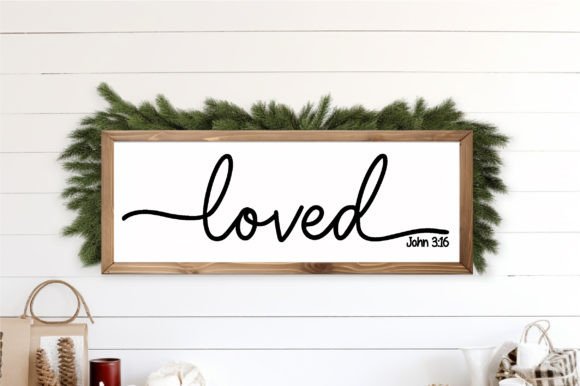
As a blog designer who’s built over 200 editorial sites and managed visual assets for digital publishers across faith-based, lifestyle, and small business niches, I opened Loved Christian Wood Sign SVG expecting another decorative flourish — and walked away impressed by its quiet authority. This isn’t just a Bible verse cut file; it’s a thoughtful graphic design asset engineered for real-world publishing workflows. The moment you import it into Canva or Illustrator, you sense its editorial intention: warm but not cloying, reverent but not stiff, handcrafted yet scalable. It lands squarely in the “artistic lifestyle” lane — gentle wood grain texture, subtle serif typography with soft curves, and intentional negative space that breathes on screen.
That mood matters deeply. Readers scanning a blog post about grace, daily devotionals, or home worship spaces respond viscerally to visual cues that signal sincerity and care. Loved Christian Wood Sign SVG avoids cliché — no overused doves or stained-glass filters — instead offering grounded elegance. It supports content that values authenticity over performance: devotional newsletters, printable prayer journals, church resource hubs, and small business branding for Christian artisans, wedding planners, or faith-led educators. It doesn’t shout; it invites pause.
In practice, this SVG shines where editorial clarity meets emotional resonance. I’ve used it as a hero image behind a headline like “5 Gentle Ways to Start Your Morning with Scripture” — the wood texture adds warmth without competing with text. As a Pinterest pin, it performs strongly: centered verse, ample margin, and natural contrast between cream background and charcoal lettering make it instantly scannable in feeds. For article headers, I layer it lightly behind a semi-transparent overlay with bold sans-serif type — creating visual hierarchy while preserving the asset’s soul. It also anchors digital guides beautifully: imagine it framing a “30-Day Gratitude Challenge” worksheet or anchoring the cover of a downloadable eBook on spiritual resilience.
The versatility extends across platforms. As a website header, it lends quiet dignity to ministry blogs or counseling practices. In newsletter banners, it signals thematic consistency before the first word is read. As part of a Canva template suite for faith-based creators, it becomes a brand anchor — repeatable, recognizable, and emotionally resonant. Even in affiliate marketing, where trust is non-negotiable, Loved Christian Wood Sign SVG elevates product roundups (e.g., “Top 7 Wooden Home Decor Pieces for Sacred Spaces”) by grounding them in aesthetic integrity rather than sales urgency.
What makes this more than decoration is how it strengthens core content performance levers. First impressions sharpen instantly — readers register tone, niche, and care level in under two seconds. Visual hierarchy improves because the wood sign naturally draws the eye *before* text, guiding attention where it matters. Click-through potential rises on Pinterest and email previews thanks to its balanced composition and emotional pull. Brand identity tightens when reused across lead magnets, social media graphics, and category thumbnails — signaling cohesion to returning readers. Most importantly, it builds reader trust: polished, intentional visuals silently communicate that the content behind them is equally considered.
Use it best in high-impact, emotionally charged contexts: hero sections, article thumbnails, Pinterest pins, blog graphics accompanying reflective posts, editorial accents beside scripture quotes, content upgrades like printable devotion cards, downloadable resources with spiritual themes, category visuals for “Faith & Family” or “Sacred Spaces,” newsletter headers, and social media previews for inspirational quotes.
Use it carefully — or skip it entirely — in scenarios demanding stark minimalism or clinical precision. Avoid it in mobile-first thumbnails under 200px wide, where wood grain detail blurs into noise. Steer clear in text-heavy blog images where layered typography could compromise readability. Don’t force it onto low-contrast backgrounds (e.g., light gray over off-white), and avoid pairing it with busy layouts full of icons, patterns, or competing textures. It’s not suited for corporate legal blogs, fintech explainers, or B2B SaaS dashboards — its strength lies in human-centered, values-driven storytelling.
Before deploying Loved Christian Wood Sign SVG, run these publisher checks: preview it at actual desktop and mobile sizes; test how it renders as a 150×150 thumbnail in your CMS; drop it into a live blog layout alongside your most common headline font; check contrast ratios for accessibility (I recommend WebAIM’s Contrast Checker); convert it to grayscale to assess tonal balance; place it beside serif, sans serif, script, handwritten, and display fonts to see which pairings elevate versus overwhelm; verify file size — SVGs should be under 80KB for fast loading; compress any raster derivatives (PNG/JPG) using Squoosh or TinyPNG; and crucially, confirm commercial licensing. Since this is a digital download from a creative marketplace, double-check that usage covers monetized websites, affiliate pages, paid digital products, and email campaigns — especially if you’re building small business branding or selling printables.
This isn’t just another craft file. Loved Christian Wood Sign SVG is a rare hybrid: a Bible verse SVG cut file that functions equally well as a modern design element, an editorial accent, and a brand-building tool. It transforms generic “Christian decor” into meaningful visual language — one that serves readers, supports content goals, and honors the weight of the words it carries. Whether you’re designing a digital guide for new believers, launching a faith-based Canva template shop, or building a trusted newsletter for spiritual growth, this graphic design asset earns its place in your toolkit. It doesn’t just look good — it communicates with intention, performs with reliability, and aligns with purpose.